
 contact-center
Contact Segment Automation Flow
Contact Segment triggered automation flows run when a contact enters or exits a defined segment. Segment entry and exit-based automation is a flexible and effective way to create targeted, personalized automation flows for your audience.
By using segments in your flows, you can reach contacts who are newly added, re-added, or have recently dropped out of a segment. This helps you deliver relevant content and timely offers based on user behavior or status, improving engagement and retention.
Here are a few ways you can use the Contact Segment Trigger automation type:
Welcome new sign-ups – Automatically send a welcome email, SMS, or WhatsApp message when a contact enters a designated segment.
Drive re-engagement – Send targeted follow-up messages to contacts re-added to a segment after inactivity or disengagement.
Target drop-offs – Trigger a message or offer when a contact exits a segment, such as unsubscribing from a product list or missing an activity.
Promote lifecycle campaigns – Initiate automation flows based on changes in customer segments, such as moving from “Leads” to “Active Customers.”
Set up a new automation that runs when a contact enters or exits a segment.
Open the Flow Builder to change the trigger, actions, or rules of an existing flow.
Temporarily stop a running contact segment automation.
Reactivate a paused flow and review optional re-entry and exit settings.
Before You Begin
Make sure you have at least one contact segment created. You’ll need it to configure the trigger. For more details, see the segments documentation.
Create a Contact Segment Automation Flow
Use the steps below to create an automation flow triggered when a contact enters or exits a specific segment.
Step 1: Open the Create Flow Panel
Navigate to Automations > Flows.
Click the + Create Flow button.
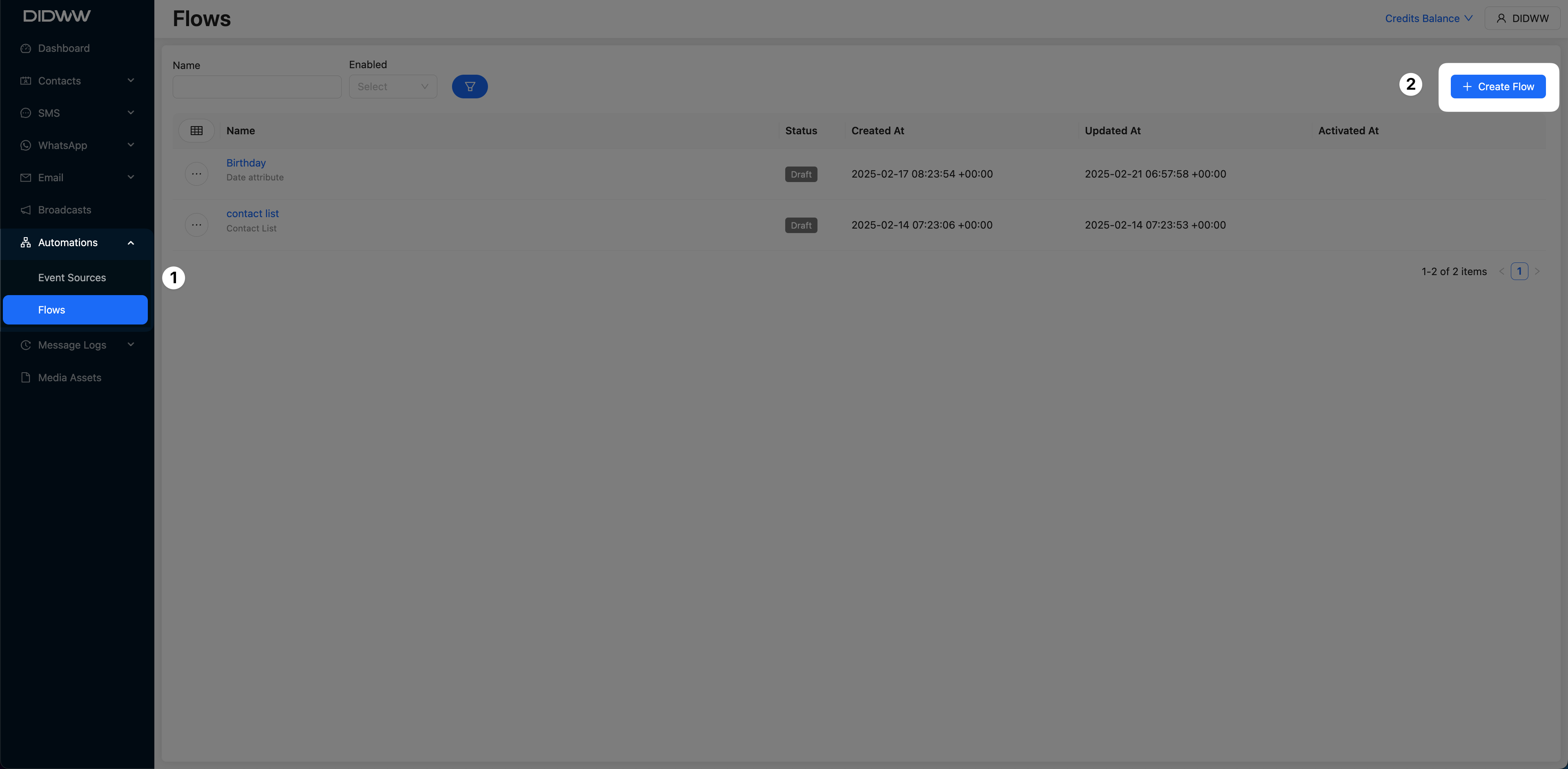
Fig. 1. Open the Create Flow Panel.
Step 2: Select the Contact Segment Trigger
Enter a descriptive name for your automation flow (for example, Engaged Users).
In the Select a Trigger window, click Contact Segment.
Click OK to confirm.
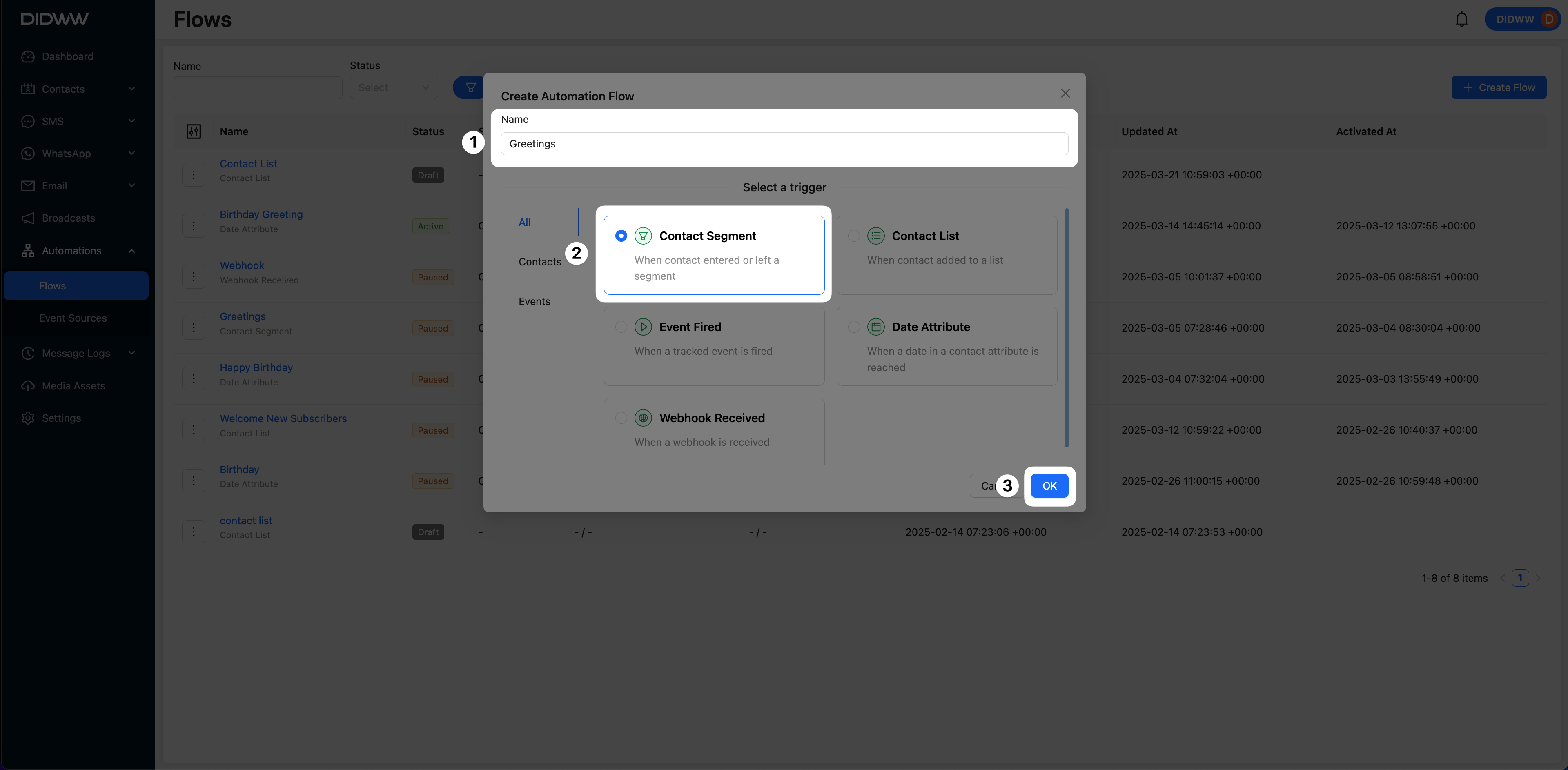
Fig. 2. Select the Contact Segment Trigger.
Step 3: Edit the Contact Segment Trigger
To proceed with the automation setup, the Contact Segment Trigger must be configured. This is a required step before the flow can be activated.
You can edit the Contact Segment Trigger using one of the following methods:

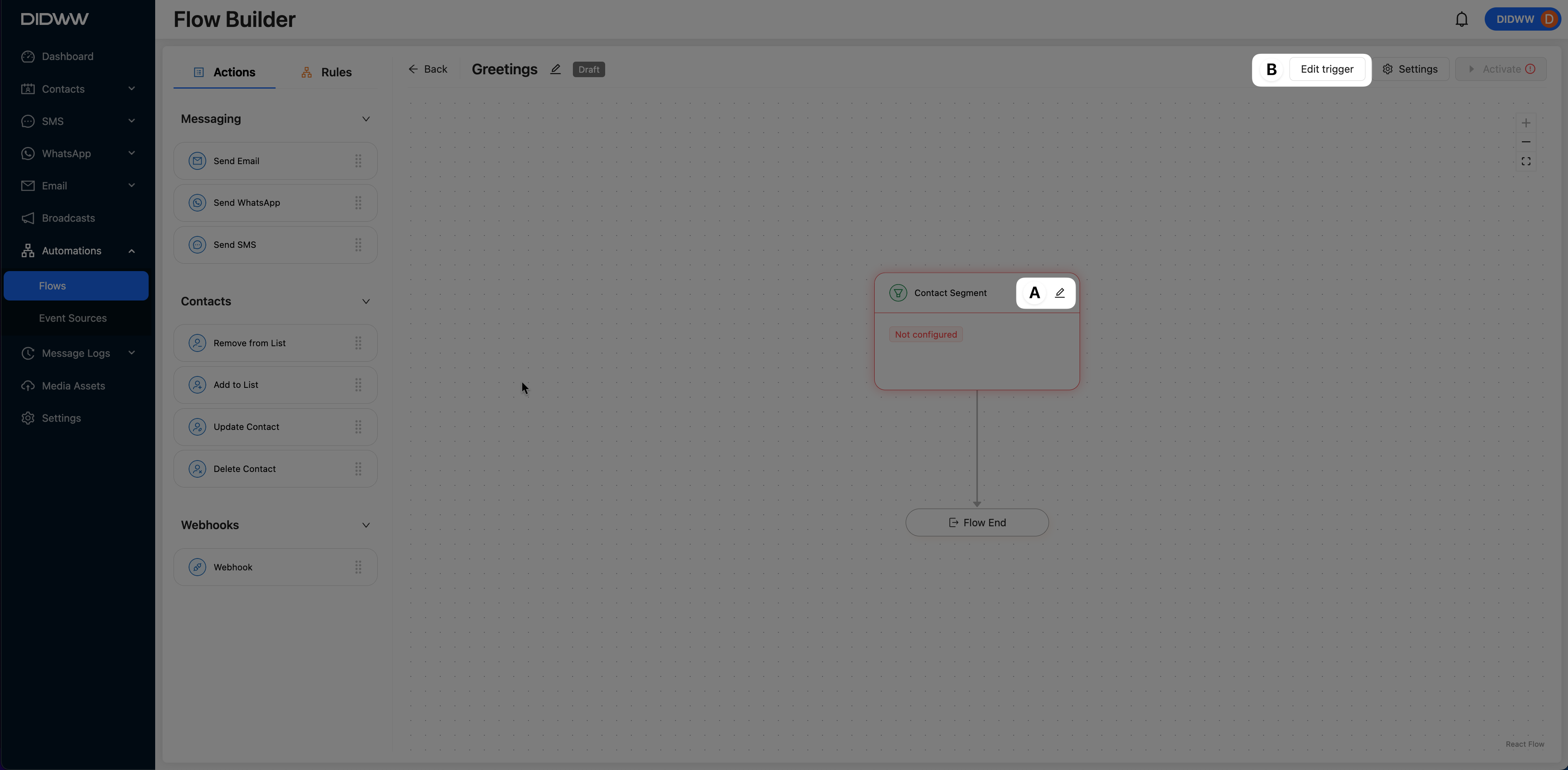
Fig. 3. Edit the Contact Segment Trigger.
Step 4: Configure the Contact Segment Trigger
In the Edit Contact Segment Trigger panel, complete the following steps:
Set the trigger condition – Use the dropdowns to choose when the automation flow should trigger (e.g., when a contact enters or leaves a segment named Signed Up).
Select the segment – Choose the target contact segment from the list.
(Optional) Add filters – Refine which contacts activate the automation flow based on additional conditions:
Use All of (AND) or At least one (OR) logic to group multiple conditions.
Click + Add Condition / Group.
Select a filter, such as Contact Attribute: SMS Subscribed = True.
Click Save to apply the trigger settings and return to the automation flow builder.
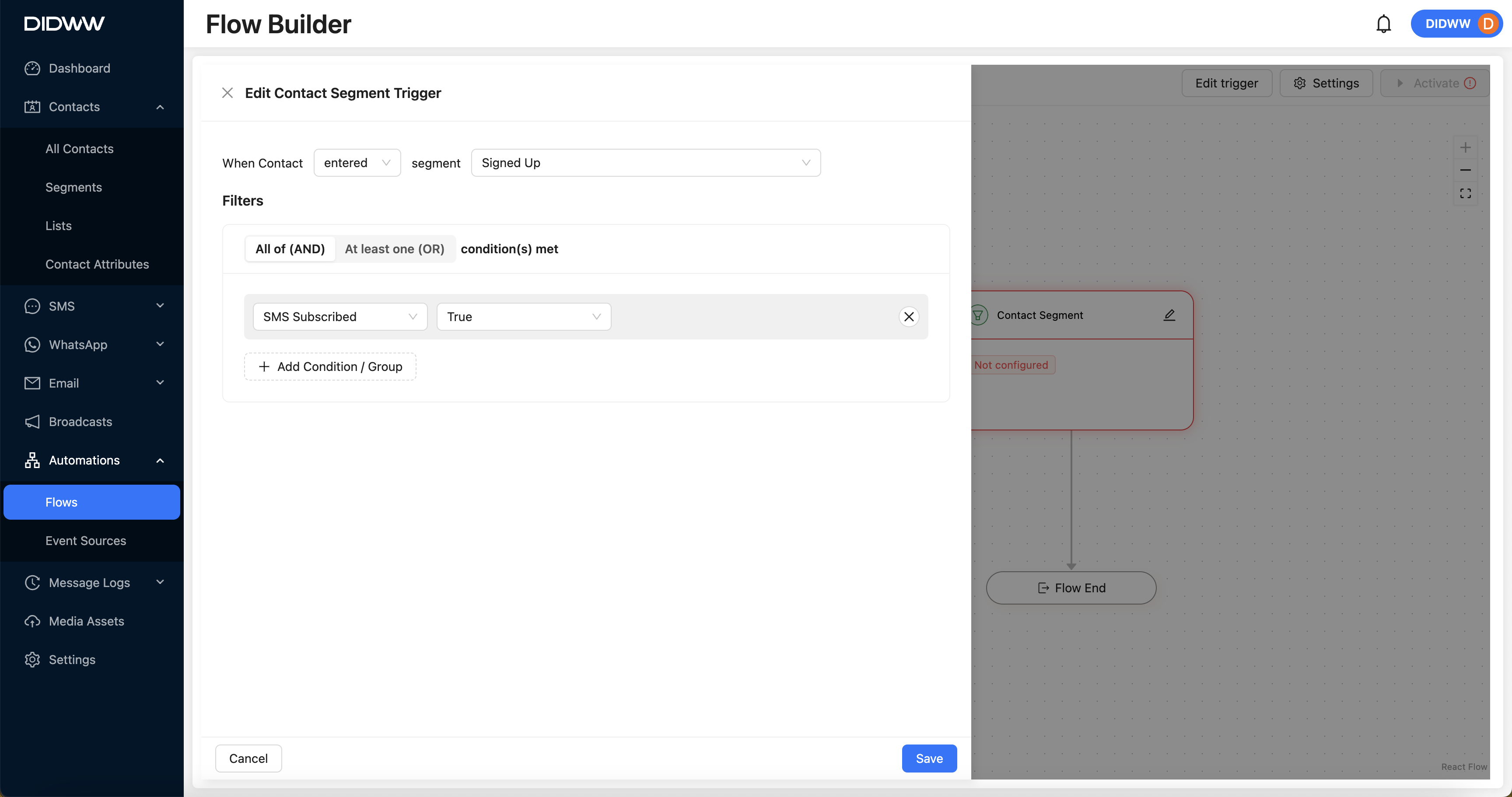
Fig. 4. Configure the Contact Segment Trigger.
Step 5: Build the Automation Flow
After configuring the Contact Segment trigger, proceed to build the automation flow using available Actions and Rules in the drag-and-drop interface.
To build your automation flow, you will use two types of components:
Actions – What should happen (e.g., send a message, update a contact).
Rules – Logic-based controls that determine how and when actions are executed (e.g., wait, branch, check conditions).
Start by adding an action. For example, to send a welcome SMS:
From the Actions panel, select Send SMS.
Drag the Send SMS object to the + rectangle in the automation flow canvas.
Once placed, a configuration window will appear where you can customize the SMS content and sender details.
You can repeat this process with other messaging channels or logic-based rules to create a fully automated flow tailored to your use case.
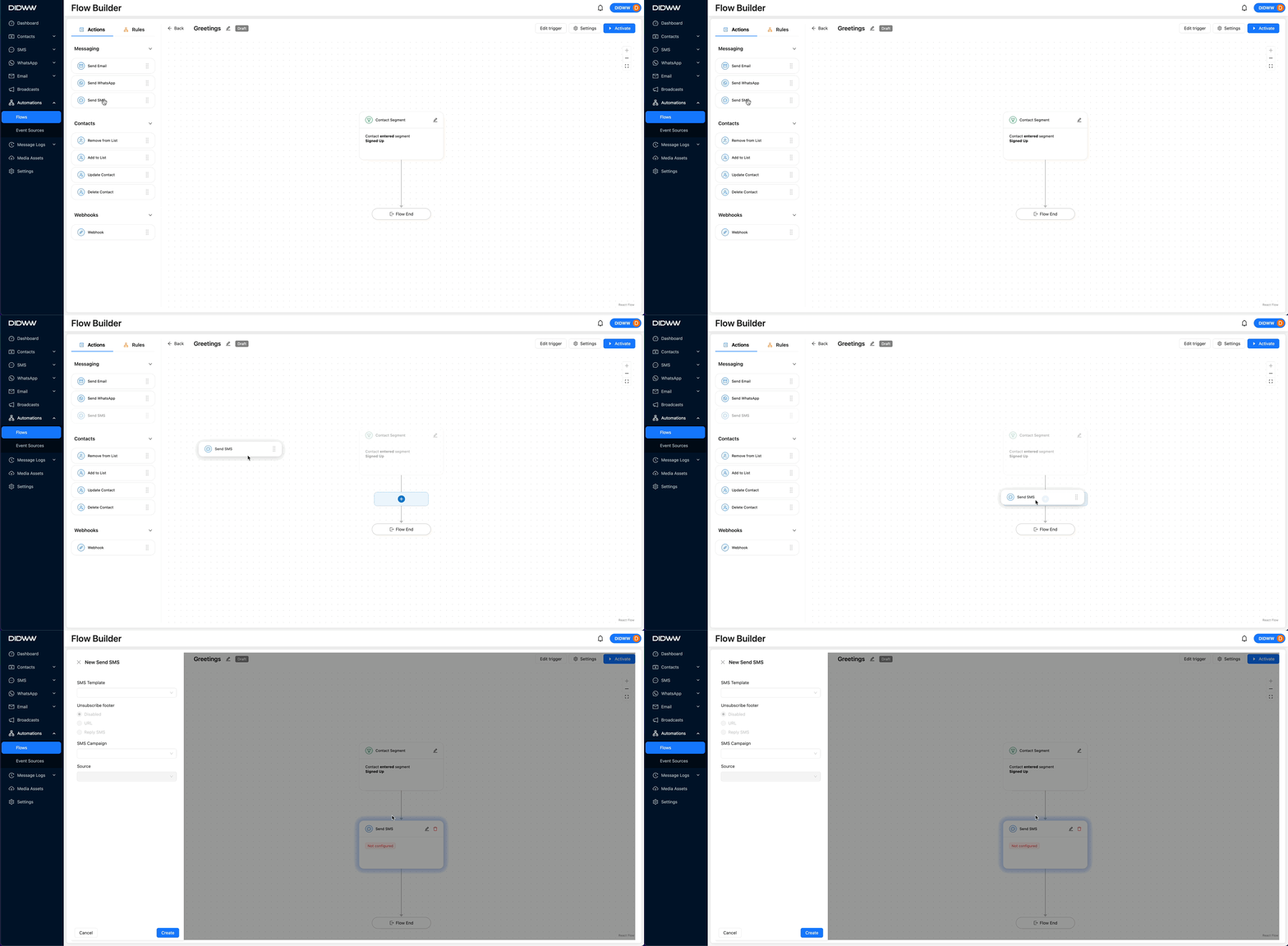
Fig. 5. Automation Flow Builder.
Once you understand the drag-and-drop process, review the available Actions and Rules described in the following sections to configure your automation flow in detail.
Actions in Flow Builder
Actions define what happens when a flow is triggered. These actions allow you to send messages, update contact information, manage lists, or interact with external systems.
The table below outlines each available action, including a description, required inputs, and common usage examples.
Action |
Description |
Inputs Required |
Usage Examples |
|---|---|---|---|
Sends an email to the contact using a predefined template. |
|
|
|
Sends a WhatsApp message via the WhatsApp Business API using |
|
|
|
Sends an SMS message using a selected template and Sender ID. Supports opt-out footers for compliance. |
|
|
|
Removes a contact from a specified list. Useful for segmentation and managing opt-outs. |
|
|
|
Adds a contact to a specified list. Used for managing subscriptions or categorizing contacts. |
|
|
|
Updates a contact’s attributes such as name, |
|
|
|
Permanently deletes a contact from the system. Used for compliance or list cleanup. |
|
|
|
Sends structured data to external systems via an HTTP request. Enables real-time integrations. |
|
|


Rules in Flow Builder
Rules define the logic that controls how and when actions are executed within an automation flow. They are used to introduce delays, evaluate conditions, and create decision branches based on contact data or behavior.
The table below describes the available rules, including what each rule does, the configuration inputs required, and examples of when to use them.
Rule |
Description |
Inputs Required |
Usage Examples |
|---|---|---|---|
Pauses the flow for a specified duration before executing |
|
|
|
Splits the flow into two paths based on whether a condition |
|
|


For detailed configuration steps and advanced usage, see the full documentation:
View the full guide on how to configure each available automation flow Action and Rule in the Flow Builder.
Step 6: Activate the Automation Flow
Once you’ve configured the main trigger object and built the flow based on your use case, you’re ready to activate the automation.
Note
The Activate button will be disabled if the trigger object (shown at the top of the flow) has not been configured. To complete this setup, click Edit Trigger or refer to Step 3.
After activation, you can pause the automation at any time if you need to make changes or temporarily stop the flow.
Follow these steps to activate the flow:
Click Activate in the top-right corner of the automation flow builder.
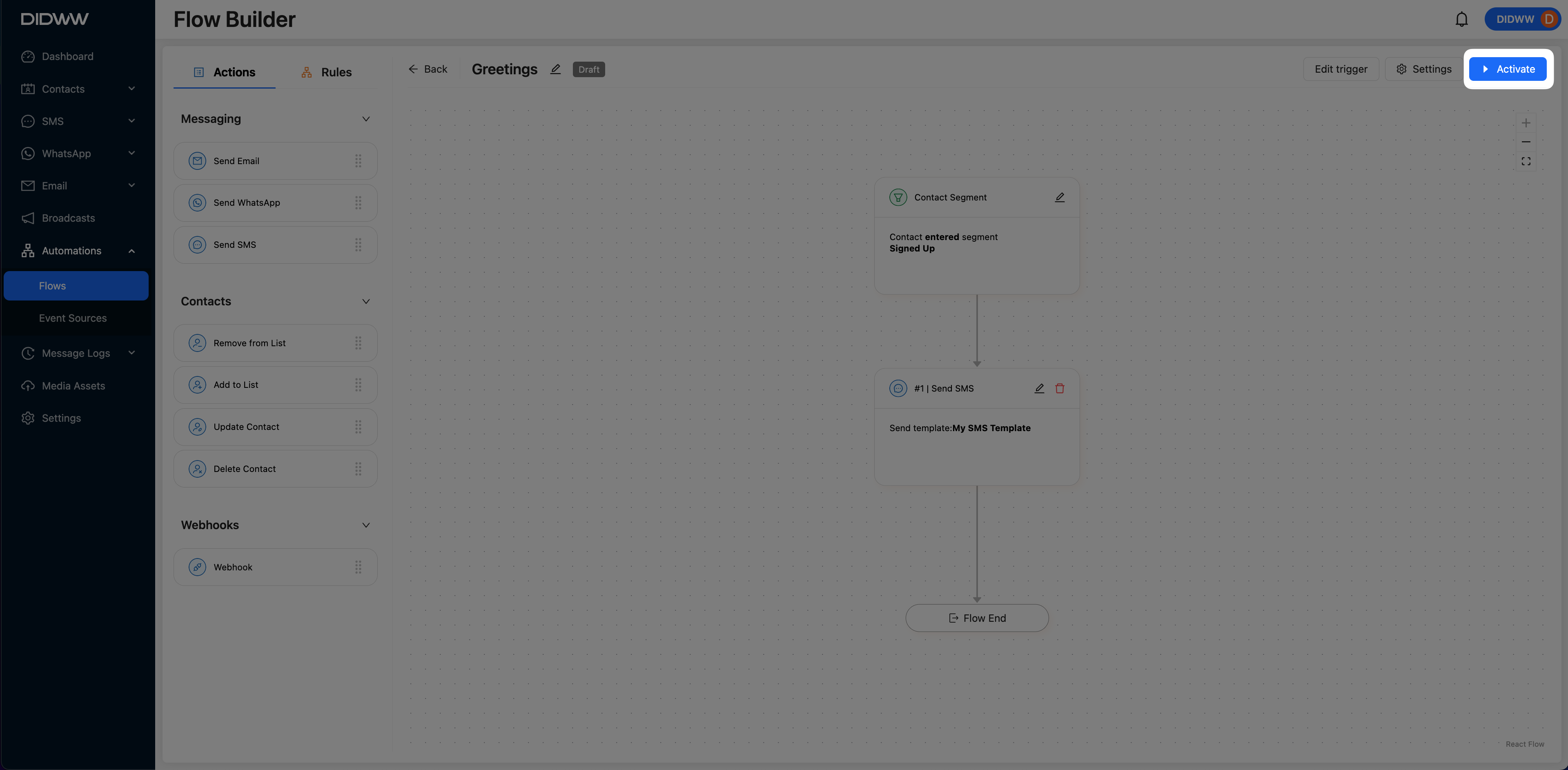
Fig. 6. Activate Button in the Flow Builder.
A modal window appears with optional settings you can configure before activating the flow:
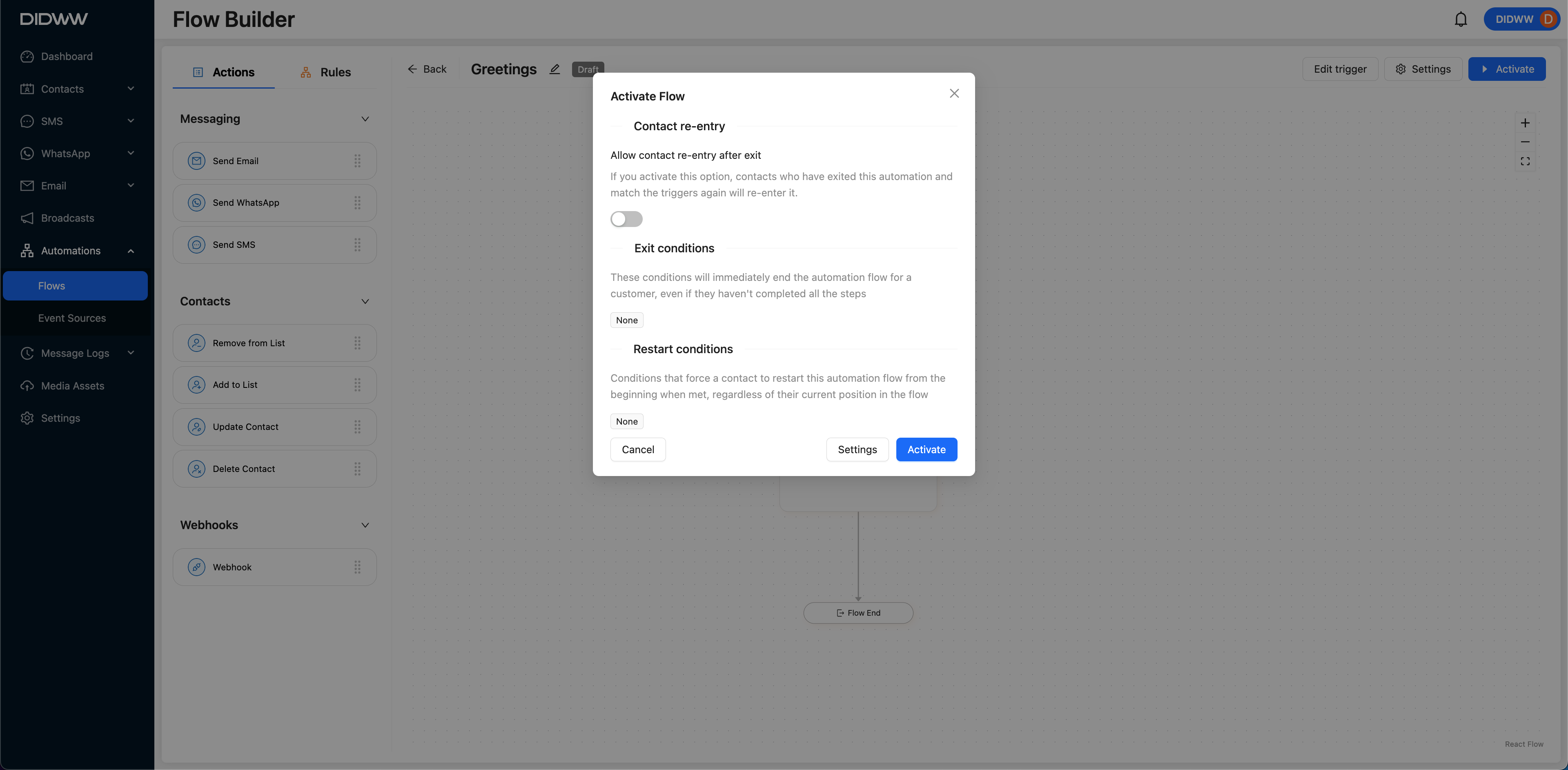
Fig. 7. Activate Flow Confirmation Window.
In the Activate Flow window, you can configure optional settings to control how contacts enter, exit, or restart the automation:
Option |
Description |
|---|---|
Allow contact re-entry after exit |
Allows contacts to re-enter the automation if they meet the trigger conditions again after exiting. |
Set up wait time (only visible if re-entry is enabled) |
Specifies how long the system should wait before checking if the contact matches the trigger conditions again. |
Exit conditions |
Defines when a contact should immediately exit the flow. For example, when they leave the target segment. |
Restart conditions |
Forces a contact to restart the flow from the beginning, regardless of their current progress. |
Note
To configure Exit Conditions and Restart Conditions, click the Settings button inside the modal. These settings are optional and depend on your flow logic.
Tip
Adding the exit condition “contact exits the segment” is recommended when you want to stop contacts from continuing through the flow if they no longer belong to the segment. This helps ensure the automation behaves as intended.
Once you’ve reviewed or configured the optional settings, click Activate to launch the automation.
The flow status will change from
 to
to
 and will automatically run based on the defined segment entry and exit conditions.
Edit the Contact Segment Automation Flow
To update an existing contact segment automation flow, use the Flow Builder to access and modify its configuration. Follow the steps below to edit the flow, including its triggers, actions, and other components.
Navigate to Automations > Flows.
Find the flow in the list.
Click the flow name or the Actions (…) button and select Builder.
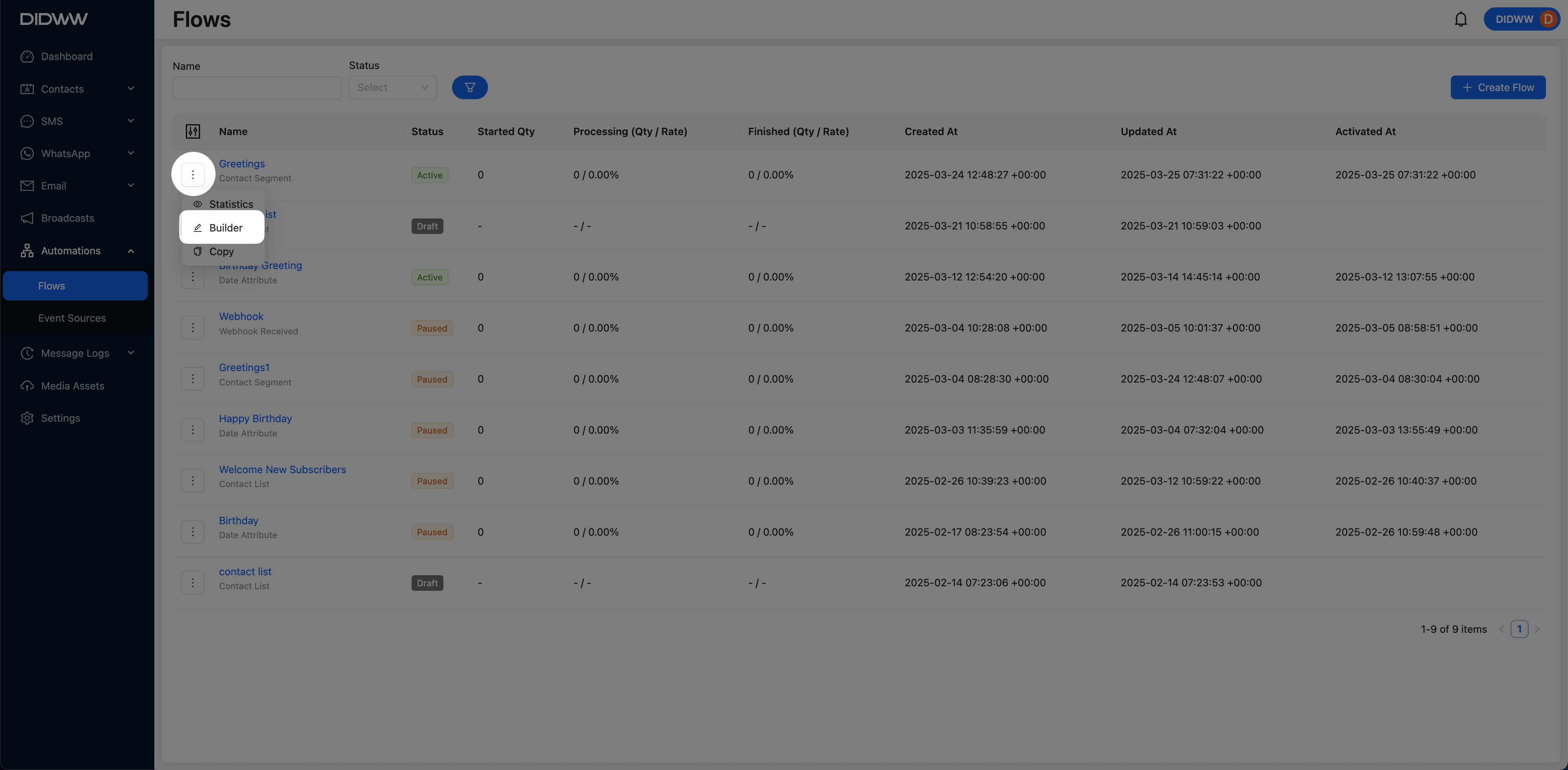
Fig. 8. Edit the Contact Segment Automation Flow.
Pause an Active Contact Segment Automation Flow
To temporarily stop an automation from running, you can pause the contact segment automation flow. Follow the steps below to access the Flow Builder and pause the active flow.
Navigate to Automations > Flows.
Find the flow in the list.
Click the flow name or the Actions (…) button and select Builder.
In the Flow Builder click Pause button to stop the automation flow.
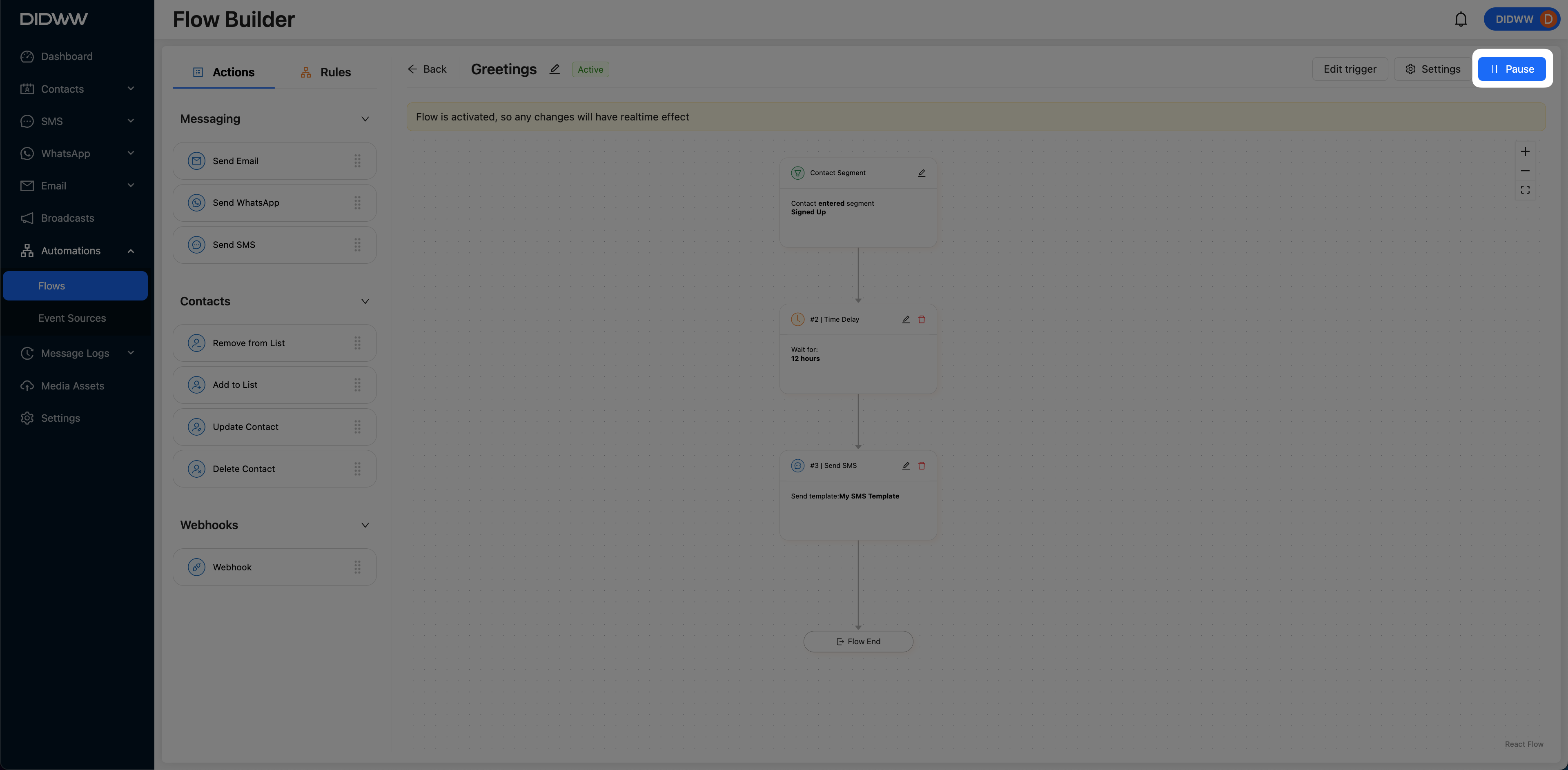
Fig. 9. Pausing Contact Segment Trigger Flow.
Activate a Paused Contact Segment Automation Flow
To resume a previously paused contact segment automation flow, follow the steps below. During activation, you can review and adjust settings such as re-entry rules, wait times, and exit or restart conditions before reactivating the flow.
Navigate to Automations > Flows.
Find the flow in the list.
Click the flow name or the Actions (…) button and select Builder.
In the Flow Builder, click Activate to reactivate the automation flow.
A modal window appears with optional settings you can configure before activating the flow. These settings control how contacts enter, exit, or restart the automation. Adjust them as needed before proceeding. To learn more about optional settings, see Step 6. Activate the Automation Flow.
Fig. 10. Activating Contact Segment Trigger Flow.
Explore Other Automation Flow Trigger Types
Automate messaging when a contact is added to a list. Useful for welcome sequences and segmentation.
Run automations based on date-based attributes, such as birthdays, subscription renewals, or appointment reminders.
Trigger flows based on external events, such as purchases, cart abandonments, or user interactions. Requires event tracking configuration.
Execute actions when an external system sends a webhook request. Use webhook flows for real-time integrations and automated responses to external events.